Purpose
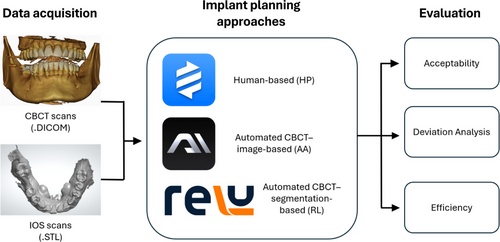
To evaluate the acceptability, deviation, and efficiency of two automated, artificial intelligence-driven implant planning methods compared with a human-based approach for single-tooth replacement.
Materials and Methods
Data of 32 patients, involving a single edentulous span, were retrospectively obtained, including cone-beam computed tomography (CBCT) and intraoral scans. Three implant planning methods were applied per case: human-based method (HP), automated CBCT–image-based method (AA), and automated CBCT–segmentation-based method (RL). Implant position acceptability was assessed by three prosthodontists using a standardized three-point scale on 12 surgical and prosthetic parameters. Using HP as a reference, angular and linear positional deviations were quantified at the implant platform and apex. Total planning time was recorded. Statistical analyses included Friedman's chi-square test, Wilcoxon test, ANOVA with Tukey's post hoc tests, and intraclass correlation coefficient (α = 0.05).
Results
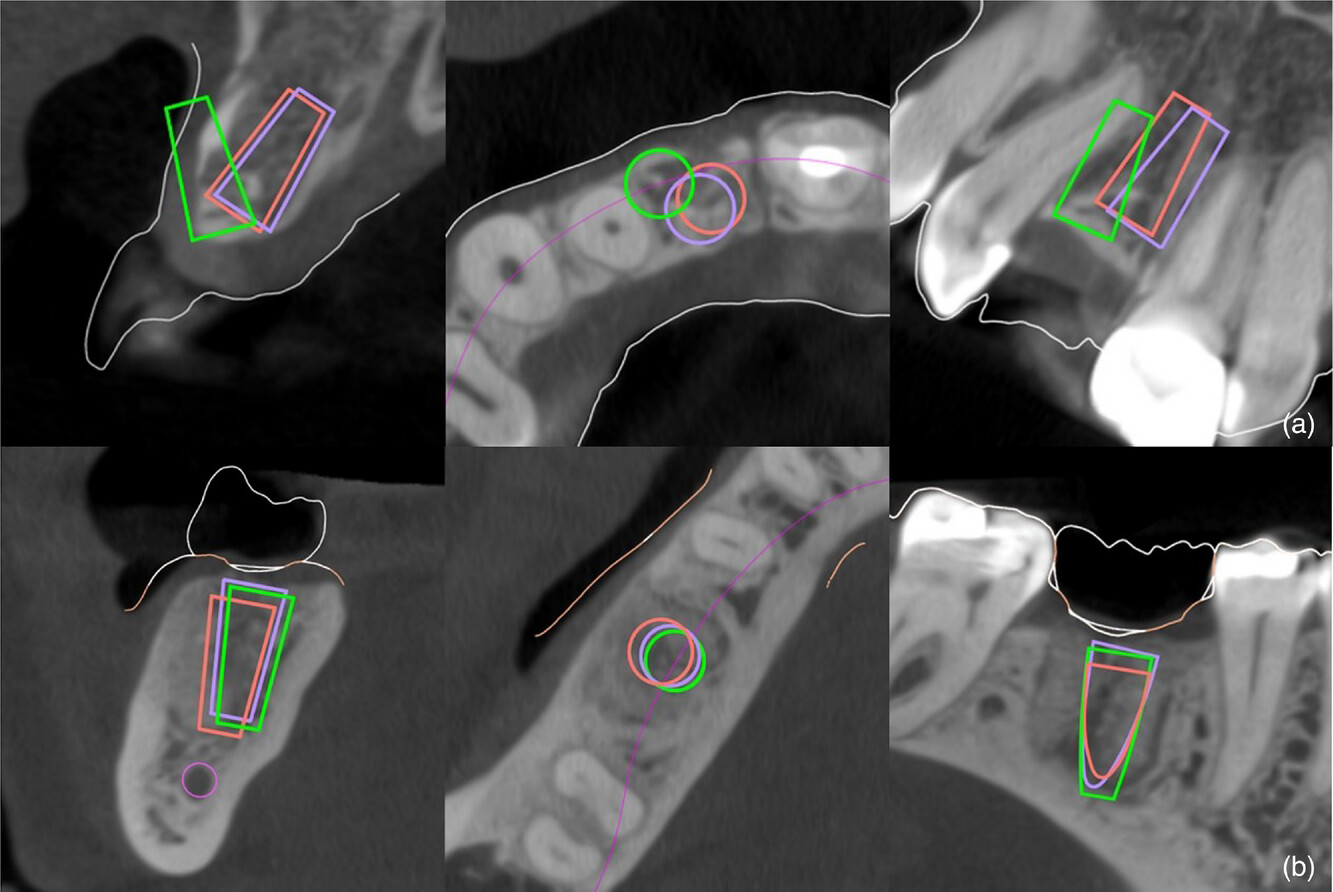
No significant differences were observed between RL and HP for most surgical and prosthetic parameters except for the crestal bone and platform-planned gingival margin distance. At the same time, AA showed significantly lower scores than both methods. No significant differences were found among the three methods for implant–mandibular canal distance. AA demonstrated significantly higher positional deviation than RL (p < 0.001). Total planning time differed significantly among methods. HP (14.1 ±2.44 min), RL (8.91 ±2.89 min), and AA (3.59 ±1.44 min) with all pairwise comparisons significant (p < 0.001).
Conclusions
Compared to HP, RL demonstrated similar surgical and prosthetic acceptability with faster planning time. AA was the most efficient but showed lower acceptability than both HP and RL, and demonstrated greater positional deviation than RL.